
Cranberry Township Resident Lookup Coverage
Official records answer narrow questions. The Butler County Property Search can connect an owner field to a parcel. The Pennsylvania UJS Case Search can show a named participant and the procedural position of a public case. Estate, historic vital, voter, and library sources each add a different time or relationship layer. None supplies a complete, current list of everyone at a Cranberry Township address.
| Record path | Question it can answer | Custodian | Access route |
|---|---|---|---|
| Assessed parcel profile | Owner associated with a parcel, address, deed reference, and sale fields | Butler County Property and Revenue | Public owner, address, or parcel search |
| Public court docket | Named party, case type, date, role, and status | Butler courts through UJS | Free case search; counter for file questions |
| Estate and probate file | Decedent, fiduciary, or heir connection where public | Butler County Register of Wills | Counter inspection or limited genealogy request |
| Historic vital record | Older family or event relationship | Butler County and Pennsylvania archives | Date-based public and request routes |
| Voter status or list | A person’s own status, or regulated election information | Pennsylvania and Butler County elections | Individual tool or authorized request |
Start with the record most closely tied to the fact being checked. A parcel can support an ownership question, while an estate file is more suitable for an heir question. A court hit needs a party role, county, and filing date before it is connected to a person with a similar name.
Cranberry Township Resident Lookup Parcel Clues
Butler County’s property profile separates Address from Owner Address. The first is the assessed property location; the second is a tax mailing field. That distinction matters in a resident lookup. A mailing address might be elsewhere, and an ownership listing does not identify every person connected with the parcel. Preserve the Parcel ID, legal description, deed book and page, plus any sale reference before moving to another system.
| Property Search field | How it helps |
|---|---|
| Search Type | Choose Parcel Number, Owner, or Address before entering a term. |
| Results columns | Parcel ID, Owner, and Street Address provide initial context. |
| Profile fields | Address, Owner Address, legal description, deed book/page, values, and sales distinguish property facts. |
| Old-record gap | Missing sketches or old cards may require a county-office visit. |
The county says property transfers by legal description rather than parcel number. Use the parcel number as a bridge, then compare the recorded instrument’s description when the connection matters. The Township’s Property Finder can add street, development, address-point, and parcel-map context, but it is not a household roster.
Note: An assessed owner and a tax mailing address are separate fields, so neither alone establishes a person’s current residence.
Cranberry Township Resident Lookup Court Filters
For a public court question, use the UJS participant search with a surname, first name when known, Butler County, and a filing-date range. The portal also offers date of birth, docket type, case category, case status, judicial district, court office, and participant-role controls. Those fields reduce the same-name problem. The portal warns that recent clerk entries can lag and that a docket is not a substitute for a criminal-history record.
| UJS field group | Useful check |
|---|---|
| Participant name and date of birth | Compare a name with another identity characteristic. |
| County and court office | Select Butler County or the relevant office to narrow statewide results. |
| Docket type, category, and status | Separate unrelated case types and check procedure. |
| Filed-date range | Match the result to the period under review. |
A docket result can include the docket number; lower-court or cross-court identifiers where applicable; participant names and roles; attorney, judge, or agency fields; case type, category, status, court office, and filing date. Address, parcel, city, ZIP, county, and municipality fields are available filters in applicable matters. Sealed, expunged, juvenile, adoption, and other limited-access matters should not be assumed to appear.
The Butler Clerk of Courts, Prothonotary, and individual court offices are separate custodians. Identify the division and docket before requesting a paper file, certification, or copy. Federal matters belong in the Western District of Pennsylvania’s PACER system, which has its own registration and current fee rules.
Verify a Cranberry Township Resident Lookup
Verification means comparing independent facts, not collecting many versions of the same name. Start with the exact spelling on a property, docket, estate, or historical result. Then compare a street, parcel or legal description, a date, a court role, or another reliable identifier from a second source. Request the underlying record from the proper custodian if the conclusion affects an estate, family-history, or personal matter.
- Search Butler County Property Search by owner, then confirm through address or parcel search and preserve both address fields.
- Use Cranberry Township Property Finder to check the parcel’s street, development, and map placement. Keep the parcel ID and legal description rather than relying on a map pin.
- Use the profile’s deed book/page or sale reference to approach the Recorder of Deeds. Its PAX landing page has a disclaimer, and the county recommends an account for saved searches, history, and cart.
- For a case or estate connection, compare the UJS party role and date or ask the Register of Wills about the public estate file. Stop when a record is restricted.
- Docket
- A court’s running record of a case, showing filings and events. It is not a complete identity record.
- Index and image
- An index points to a record. An image is the document view, which may have different access or copy rules.
- Certified copy
- A copy authenticated by the custodian for a purpose that requires official certification.
For the full parcel-by-address sequence, the Cranberry Township street directory follows the address and legal-description route in more detail.
Cranberry Township Resident Lookup Vital Dates
Vital records can support historical family relationships, but access turns on date and eligibility. Butler County’s Register of Wills and Clerk of Orphans’ Court holds birth and death registers for 1893 through 1905. It also reports marriage-license applications from 1885 forward, while certifications come from the county where the application was made. Estate and probate records run from 1800 forward, subject to public and court-sequestered limits.
For state records, Pennsylvania birth certificates become public after 105 years and death certificates after 50 years. The Pennsylvania State Archives supplies the historical index and request route. Its noncertified archival copies cost $5 under the published service, while current certified records remain a Division of Vital Records process with eligibility, identification, and fee rules.
Pennsylvania’s birth-certificate guidance shows the identity and relationship rules that apply to a current certified request.
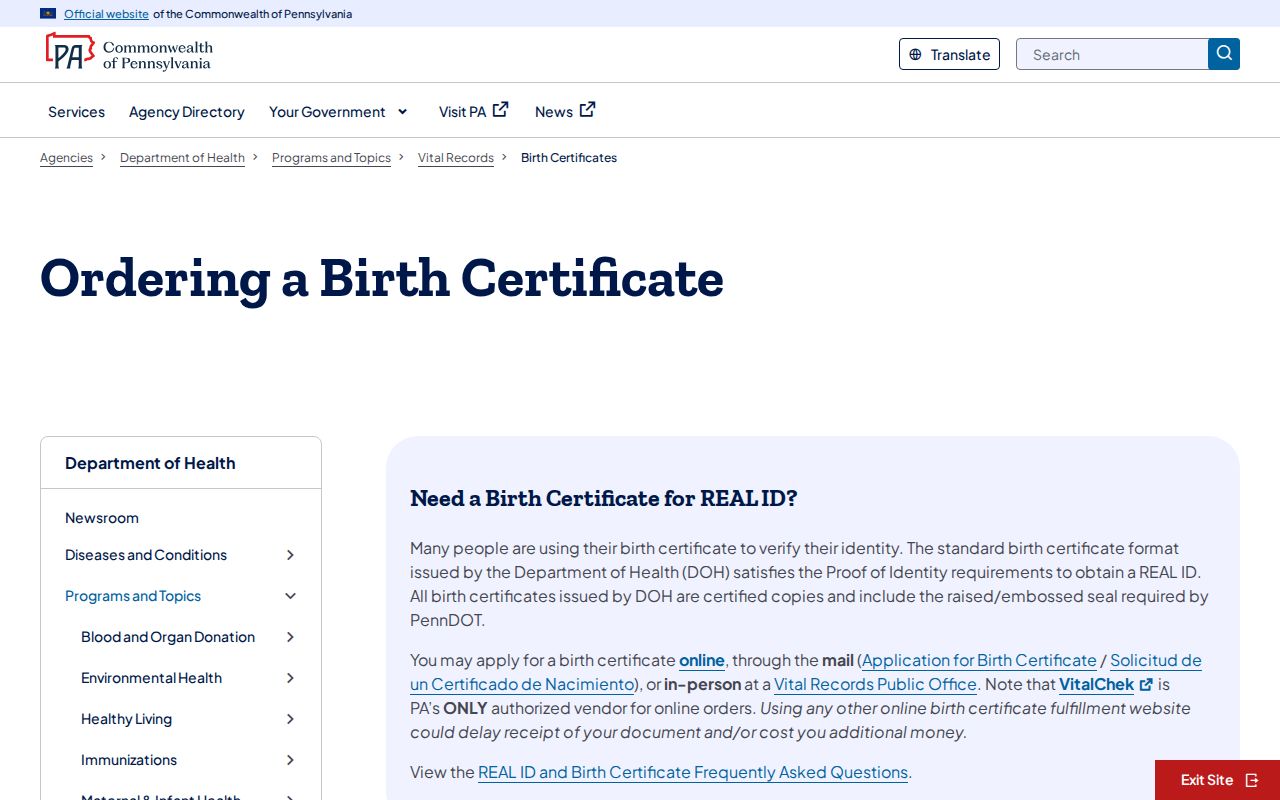
The eligibility screen is a reminder that a certificate request is not a public name search. Use the archival route only for the record age and copy type it permits.
Cranberry Township Resident Lookup Estate Leads
An heir or decedent question has a more direct path than a broad name search. The Butler County Register of Wills can be approached through public estate or probate material, with counter inspection or its limited genealogy research service. The Weir Genealogy Room’s estate-file index is a locating aid, not the estate file itself. It runs from 1804 through 1920 and includes file number, name, residence, probate year, pages, will mark, comments, and frame reference.
State business filings and professional credentials can confirm a public affiliation, but neither is a residence record. The Pennsylvania Business Filing Services search uses an entity name or entity/file number, not a natural-person owner name or address. PALS has board and credential search paths. Compare entity number, filing date, status, credential number, and listed city before treating a same-name result as relevant.
The Weir Room also maintains an obituary and newspaper index reported from 1818 through 2020. An index citation is a lead to an underlying newspaper or microfilm item, not the full account. For a former classmate or local-history question, use library yearbook, vertical-file, and collection access rules without publishing personal contact details.
Cranberry Township Resident Lookup System Limits
Specialized state systems have defined scopes. The Pennsylvania DOC locator covers state custody or supervised-individual information and says its data is updated daily, but it is not a general person or household directory. The state police registry is intended for public protection, warns against harassment, and says only fingerprint comparison provides positive identification. A result in either system cannot establish a current Cranberry Township address or identity by itself.
Pennsylvania’s DOC locator provides separate inmate and department-supervised individual modes.
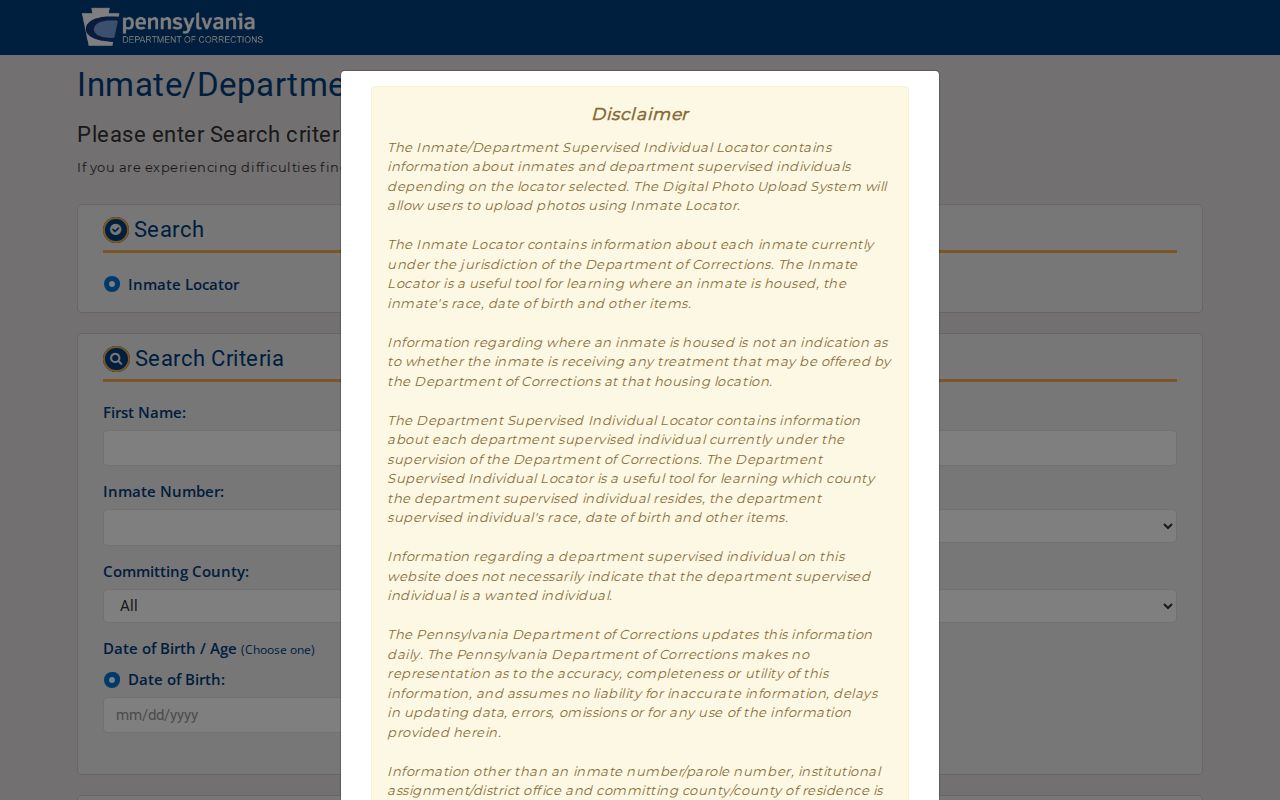
Its search controls support an official custody inquiry, not a conclusion about a person’s current household or whereabouts outside the stated scope.
The Pennsylvania State Police registry requires terms acceptance before searching and carries its own lawful-use warning.
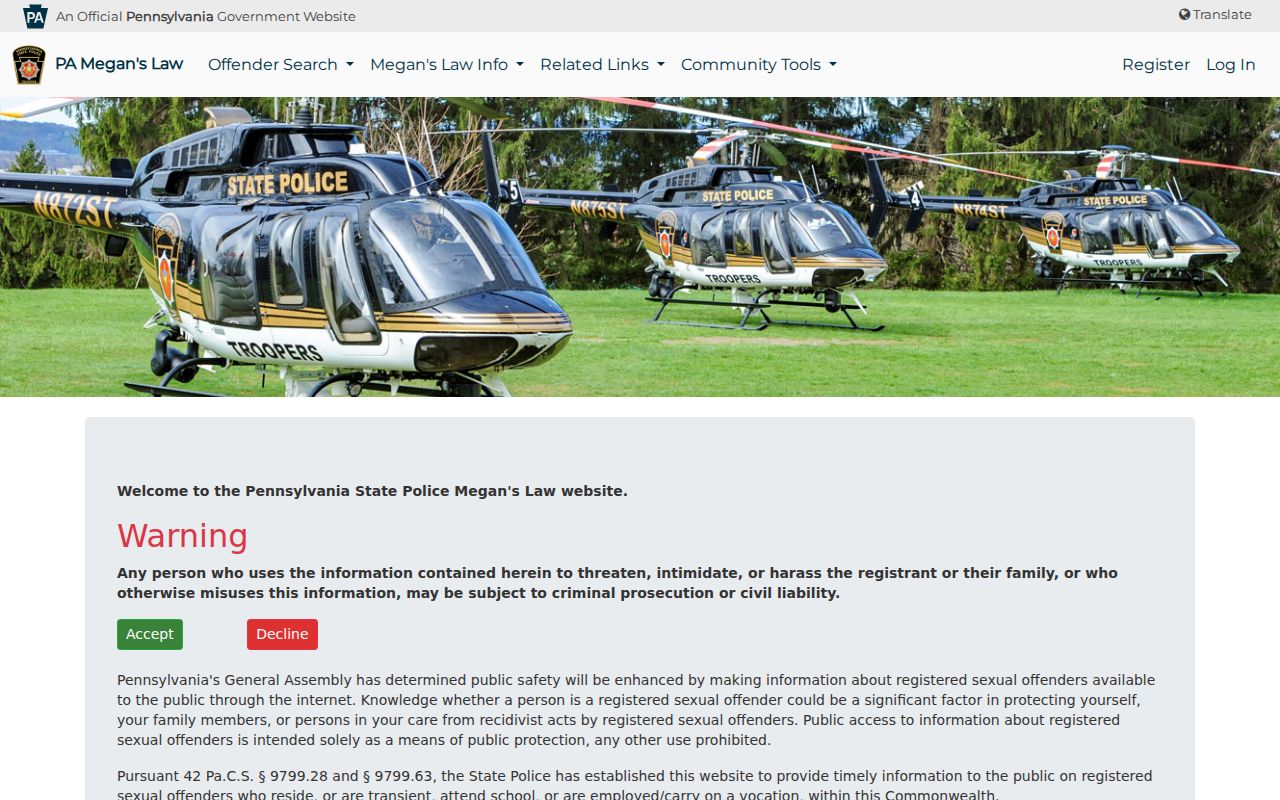
Use registry information only for its stated public-protection purpose and never to threaten, intimidate, or confront a person.
Cranberry Township Resident Lookup Request Route
When no public portal holds the needed existing agency record, Pennsylvania’s Right-to-Know Law, Act 3 of 2008, 65 P.S. §§ 67.101–67.3104, provides a written-request path. Cranberry Township accepts its completed form in person, by mail, as an email attachment, or by fax. A focused request identifies the existing record, address or subject, time period, and preferred delivery format. It asks for records, not answers to open-ended questions.
Agencies generally have five business days to respond, grant, deny with grounds, or issue a permitted extension. The Office of Open Records explains the appeal process when appropriate. Butler County has its own RTKL route for county department records. Court, police, and vital requests should instead go to their correct custodian because RTKL does not override sealing, eligibility rules, or statutory confidentiality.
Note: A narrow request with a specific date range and record description is more likely to reach the office that actually maintains the material.
Cranberry Township Resident Lookup Boundaries
Pennsylvania’s Address Confidentiality Program lets eligible participants use a substitute address in many government records, including voter registration and court or state records. A protected address or a missing result is not proof that a person moved. Public voter lists also require identification and a written permitted-use statement under 25 Pa.C.S. § 1404, while Check My Registration is an individual-status tool rather than an open browse.
Correct an error with the office that created it: assessment or mapping for parcel fields, the Recorder for a recorded-document issue, elections for a voter record, the court clerk for docket/process concerns, and the Department of Health or State Archives for a vital-record question. Butler County courts also warned in April 2026 about spoofed calls demanding payment. Courts do not call to solicit payment by card, gift card, or electronic transfer.
Lawful use. Use a Cranberry Township resident lookup for a lawful personal, family-history, estate, civic, or safety purpose. Pennsylvania law prohibits stalking and harassment; never use record information to stalk, harass, intimidate, or harm another person.