
Cranberry Township Address Record Eras
A defensible address history uses the source that fits the era. Butler County Property Search and the Township Property Finder offer current parcel context. Recorded instruments support an ownership chain. The Weir Genealogy Room offers Polk reverse-directory clues where a volume covers the address, while its newspaper, probate, census, map, and Sanborn material supplies historical context. None of those sources is a complete historical occupant list, so compare them rather than treating one result as conclusive.
| Source | Verified period | Where held | What it can show |
|---|---|---|---|
| County property profile | Current service; historical online start not published | Butler County Property Search | Parcel, owner and owner-address fields, legal description, deed book/page, sales |
| Township Property Finder | Current interactive mapping; historic layer range not published | Cranberry Township | Address, parcel, street, development, and map-layer context |
| Recorded deeds and mortgages | Public online cutoff not published | Butler County Recorder of Deeds | Grantor-grantee and legal-description ownership trail |
| Polk reverse directories | Exact local volume years not published | Weir Genealogy Room | Address-to-person or business clue where the volume covers it |
| Federal census | Released through 1950 | Weir Room, NARA, and genealogy access points | Household context, subject to place and enumeration care |
| Newspaper and obituary index | 1818–2020 | Weir Genealogy Room | Article and death-event leads, not full article text |
For a later subdivision, Township permits and development records can help date the built environment if public. Request a narrow address and time range. The published sources do not establish a general public permit-results archive or a list of everybody who has occupied a parcel.
Cranberry Township Past Household Records
Begin with the Butler County Property Search. The public profile can show a parcel ID, street Address, Owner, Owner Address, legal description, deed book/page, and sale data. Preserve all of them. The County separately labels Address and Owner Address because the latter is a tax mailing field. It can differ from the location of the parcel and does not establish that the assessed owner was a current occupant.
Butler County Mapping says property transfers by legal description rather than parcel number. A parcel ID is a useful bridge between the map and the profile, but the description on the recorded instrument controls the land trail. When the address, parcel ID, and description conflict, pause and ask the Recorder or Mapping office rather than forcing a match.
- Grantor
- The party conveying an interest in a recorded instrument.
- Grantee
- The party receiving that interest in the recorded instrument.
- Chain of title
- The sequence of recorded transfers connected by the same legal description, lot, or plan.
- Legal description
- The land description used in the deed. In Butler County it is stronger than a parcel number for verifying a transfer.
Cranberry Township Deed Records Backward
The Recorder’s PAX system is the official public-access route for recorded instruments. Its landing screen has a disclaimer and sign-in or registration controls. County guidance says an account is not required, though it is recommended for saved searches, history, and cart. The inspected public page did not publish its post-disclaimer fields, image rules, or online index start date. Do not assume an online result means the full historic chain is available there.
The Butler County Recorder public-access portal is the online starting point for the recorded-deed path.
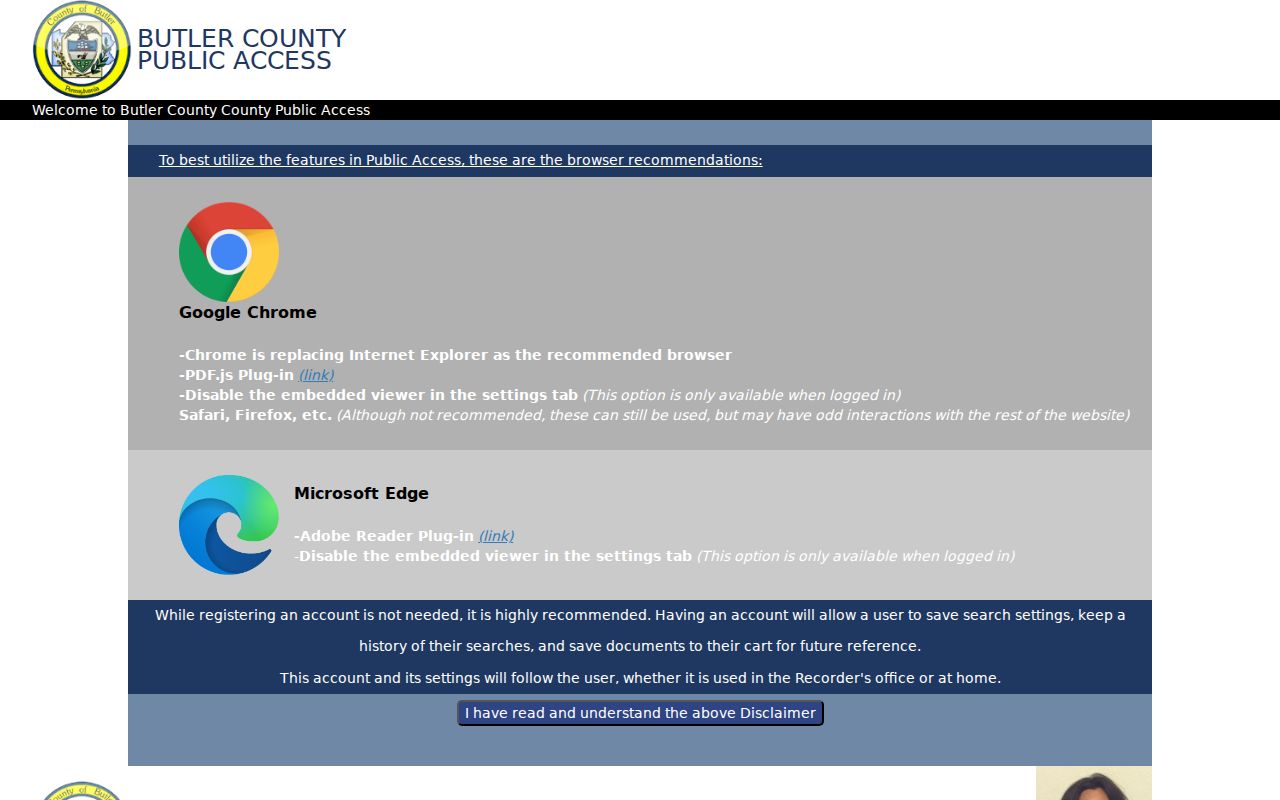
If PAX does not answer the historical question, use the Recorder counter at 124 W. Diamond Street, Government Center Floor L, Butler, or ask about a mail or copy request. The county publishes copy fees separately from recording fees, so check the current official schedule before requesting a record.
- Use the current property profile to record the legal description, deed book/page reference, sale entry, and parcel ID.
- Open the current purchase instrument through PAX or the Recorder’s counter and compare its legal description with the profile.
- Identify the conveying party on that transfer. Search that party as grantee to locate the prior acquisition.
- Repeat the comparison backward, keeping the legal description, lot or plan, book/page, and date with each link.
- When a name changes through an estate, trust, corporation, marriage, or variant spelling, test the description before treating it as the same property.
- Ask the Recorder about the older index scope or counter materials when the online trail stops. The public landing page does not state a cutoff.
Cranberry Township Estate Record Gaps
An estate can explain a break in a deed chain. The Butler County Register of Wills and Clerk of Orphans' Court reports probate and estate records from 1800 forward. Its genealogy guidance says records in those two offices are open for inspection except adoptions or court-sequestered files. A probate lead may identify a personal representative, will, or estate record that accounts for a transfer. Inspect the file before assigning the property to an heir.
The Register of Wills and Orphans' Court is the county’s primary family-record counter for an address trail.
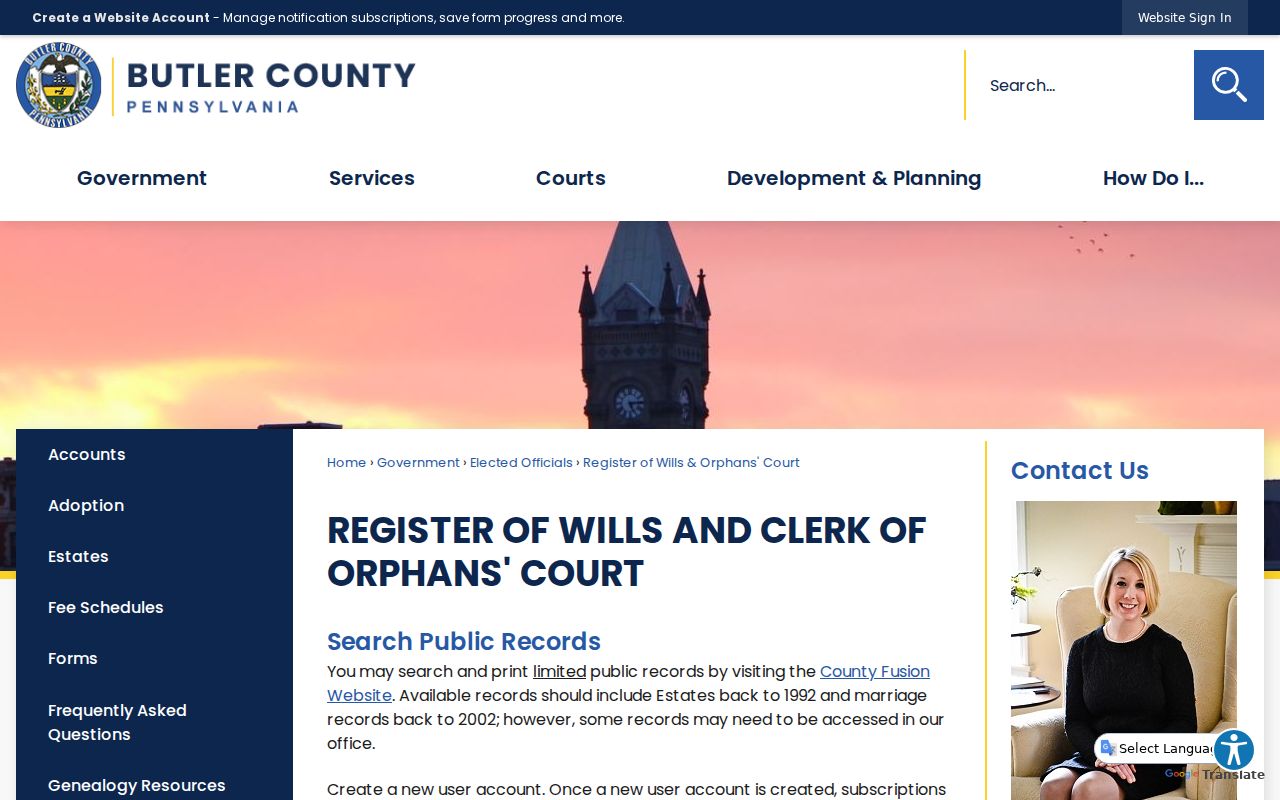
Limited genealogy research begins after the office receives an initial fee, and staff normally respond within 24 hours unless circumstances prevent it. The office also holds county birth and death registers for 1893–1905 and marriage applications from 1885 forward. Those records can date a family event, but they are not address-level proof by themselves.
Cranberry Township Past Address Records
The Weir Genealogy Room's Polk City Directories supply the documented historical occupant clue. Its onsite collections guide says the volumes contain business and personal address information and can perform reverse lookup by address. Ask for the actual volume nearest the period, copy the exact street form and surrounding headings, then compare another available year. The public guide does not name the exact Cranberry volume run or guarantee that every Township road appears.
That limitation matters. A person missing from a selected Polk volume may have moved, been omitted, used a variant name, or lived outside its geographic coverage. For the collections themselves, their access path, and how to cite the printed entry, use the Cranberry Township city directory page.
Note: A reverse-directory result is an address association for that printed volume, not proof of every person who lived at the property.
Cranberry Township Census Record Pairing
Pair a directory year with the nearest released census to test a household lead. Federal schedules are public through 1950 as of this research date, under the 72-year rule. Check the census place, enumeration district, names, and dates before connecting it to the directory. Some schedules do not supply a street address, so do not invent one from a neighborhood label or a surname alone.
- Start with the closest Polk or reverse-directory year and preserve the printed address, name spelling, and volume title.
- Check the immediately earlier and later available directory volumes for a move, a coverage change, or another name form.
- Use the nearest released census to test the household and local place context. Retain the census year separately from the directory year.
- Search the Butler obituary and newspaper index for an article citation that may date a move, death, or estate event.
- Request the underlying newspaper, probate, or vital record from the correct custodian and reconcile all dates before stating a conclusion.
Cranberry Township Family Record Clues
Marriage and vital records can add a time marker to a past-household trail when the record type and custodian fit. Butler County marriage applications begin in 1885. A certification can come only from the county where the license application was made, so a Cranberry address does not make Butler County the custodian for every marriage. Seek the county of application and use both parties’ names and an approximate date.
The Butler County marriage-license records office provides the local marriage application and certification route.
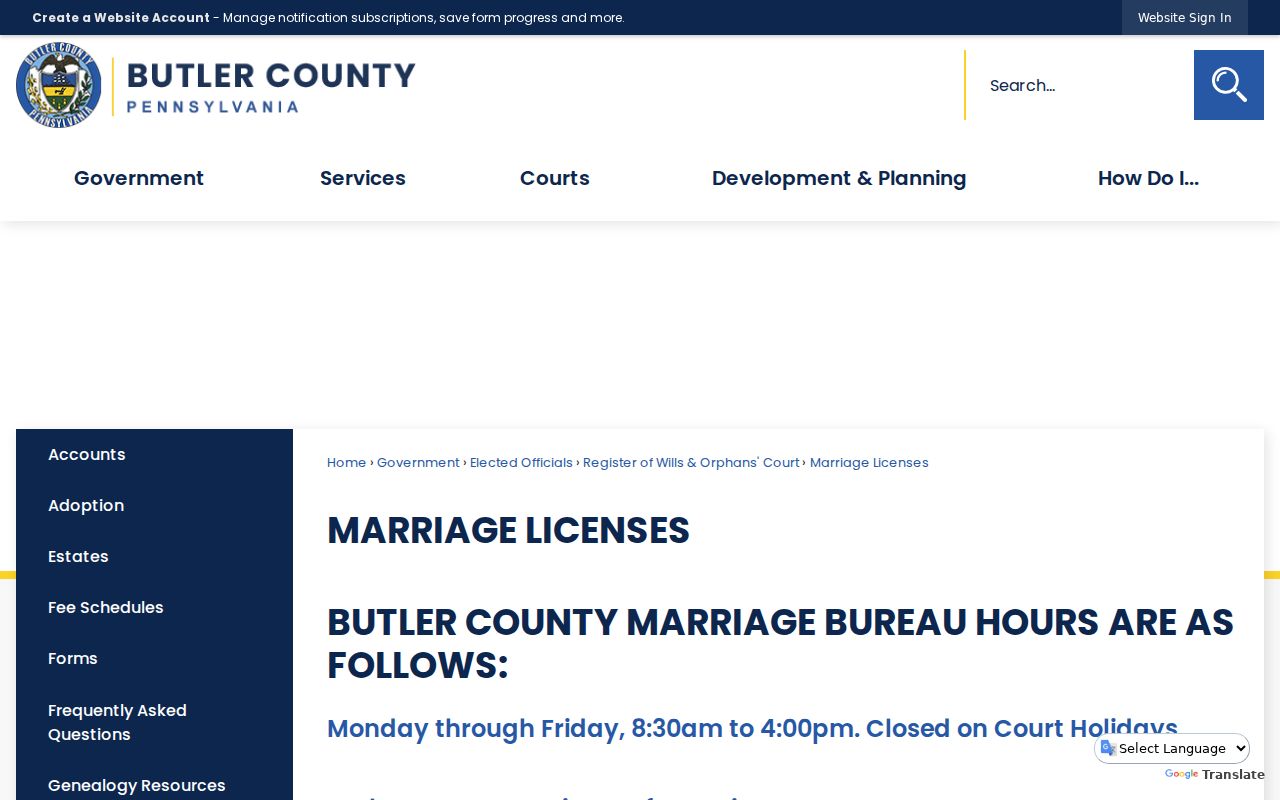
For births and deaths, Butler county registers cover 1893–1905. Pennsylvania State Archives public-copy rules apply to state births after 105 years and deaths after 50 years. A vital record can support a family-history question, but it does not by itself prove that the event address was the person’s residence.
Cranberry Township Historic Address Records
Historic maps help check an address without pretending they identify a household. The Weir Room has an indexed 1858 Butler County map, a bound 1874 atlas, and Sanborn insurance material on microfilm. The library does not publish Cranberry-specific Sanborn sheets or years, so ask staff whether a named street, village, or development is actually covered before citing a map date.
Road and boundary history can also change the search. Cranberry's first post office was Ogle, on old Perry Highway, now Dutilh Road. In 1854, Adams, Forward, and Jackson Townships were taken from Cranberry; Seven Fields separated in 1984. Test the date, historic name, and jurisdiction before connecting an older record to a current Township address. No official source inspected documents a Cranberry-wide historic renumbering, so none is assumed here.
Cranberry Township Closed Record Limits
Some missing records are protected, not lost. Pennsylvania's Address Confidentiality Program permits eligible participants to use a substitute address in government and court records, voter registration, driver records, marriage licenses, and other listed settings. A substitute address is not evidence of a move or an error. Adoption, sequestered files, sealed or expunged court matters, and nonpublic vital records also require their specific legal process.
The Pennsylvania State Archives birth-records route explains the historical public-access path by record age.
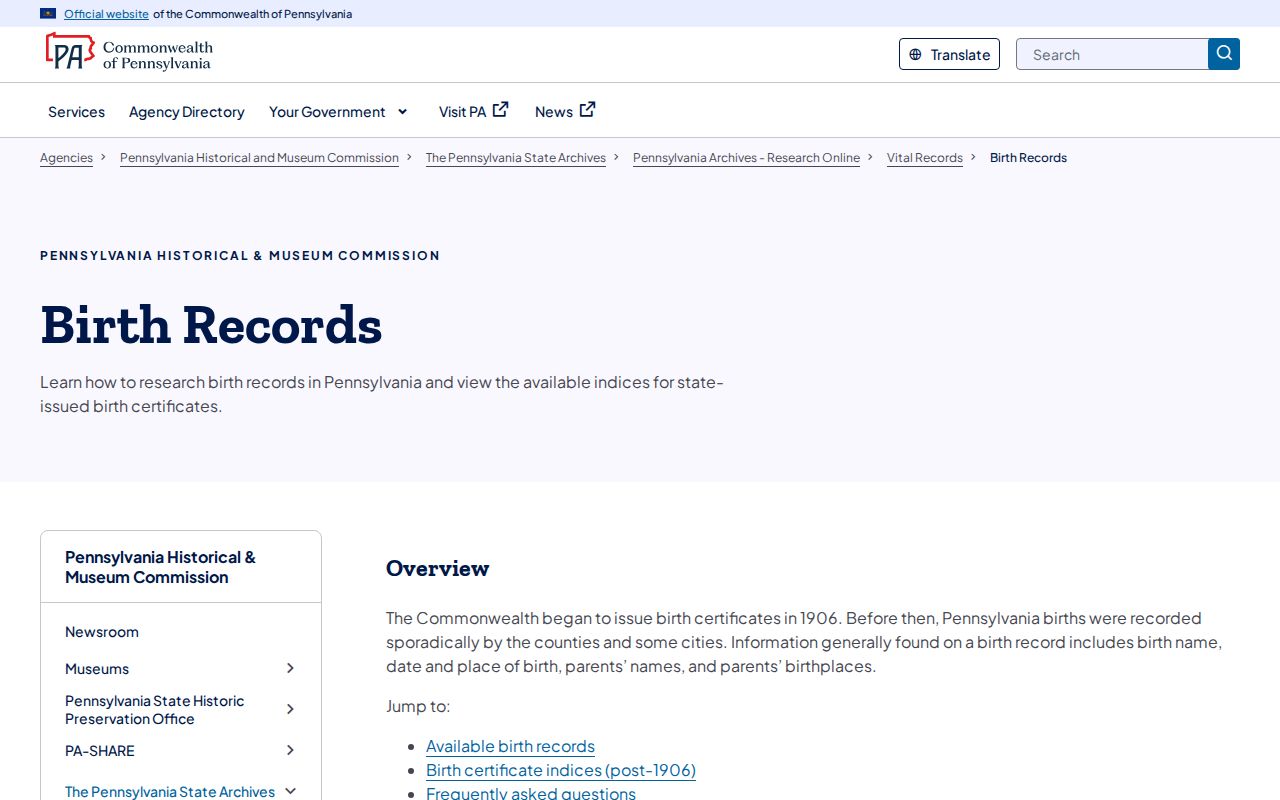
For an existing Township or county record that is not online, Pennsylvania’s Right-to-Know Law, Act 3 of 2008, 65 P.S. §§ 67.101–67.3104, provides a written-record request process subject to exemptions and redaction. Request a defined record, date span, and address from the correct custodian. It is not a route to make an agency create a past-household list.
Cranberry Township House-History Records
House-history research is appropriate for family history, estate questions, civic records, and personal curiosity. It must stay grounded in records that are lawfully available and in the limits stated by the custodian. Property profiles do not list every household member, and there is no verified official public utility-customer directory for Cranberry Township. A map layer shows physical context, not a roster.
Lawful use. Use past-resident information for legitimate personal or historical research. Pennsylvania law prohibits stalking and harassment, and no record should be used to track, threaten, or harm a living person.
Butler County courts warned in April 2026 about spoofed calls seeking payment under a fictitious court name. A request for a record should use an independently verified office contact, never an unsolicited demand for a card, gift card, or electronic transfer.